Regions / Chikmagalur / Yercaud
Yercaud
The Shevaroy Hills, one of the earliest European coffee plantation belts in southern India.
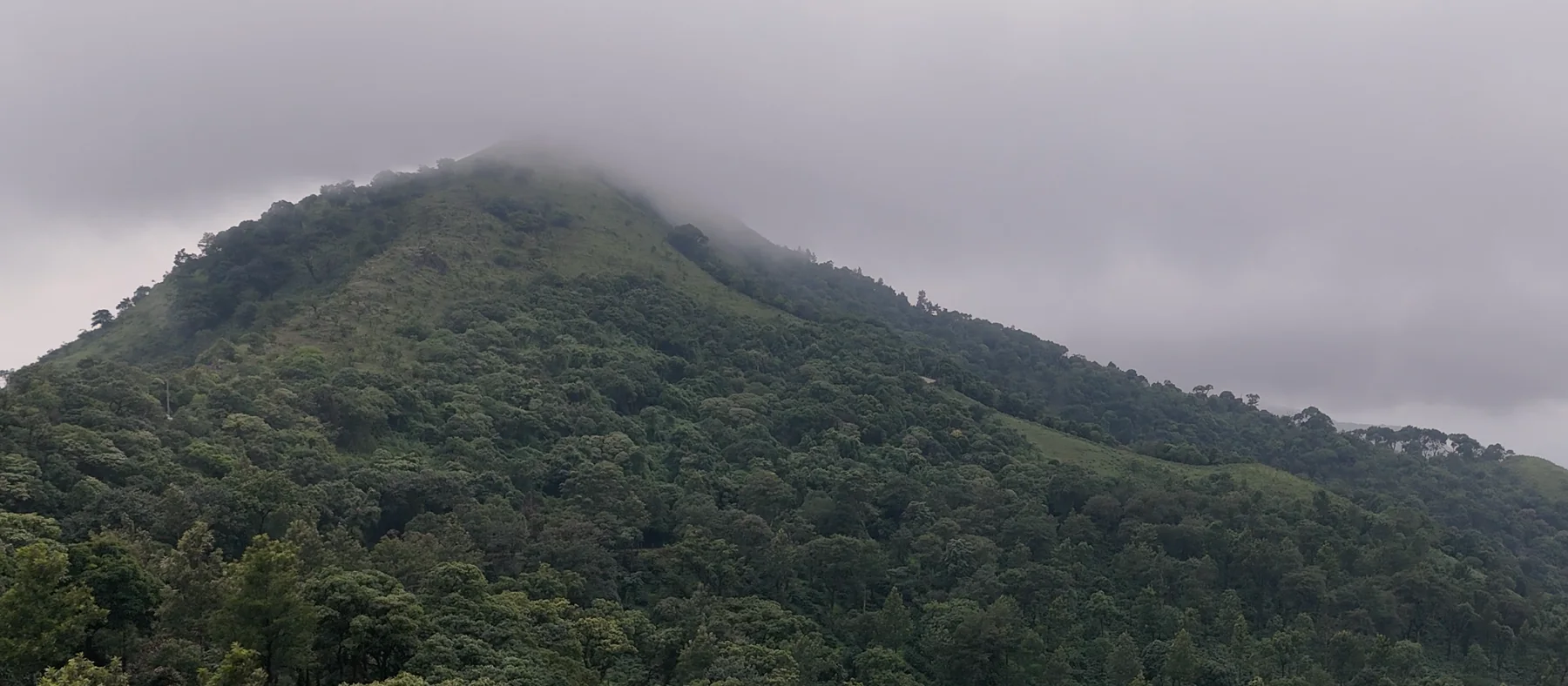
A compact massif in the Eastern Ghats, rising sharply from the Salem plains to around 1,500 metres. Coffee has grown here for over two centuries, kept intact by a small circle of heritage planter families.
Shevaroy Arabica, Eastern Ghats
The origin story
Montague Dundas Cockburn, a Scottish planter, served as Collector of Salem between 1820 and 1829. Almost as soon as he took the post he began working the empty upper reaches of the Shevaroys — a bungalow, coffee plants brought in from Africa, and the first ground put into coffee in 1820. He is still remembered locally as the Father of Yercaud.
Cockburn did not stop at coffee. Across roughly two decades he introduced pears, apples and a range of fruit trees, creating the horticultural template most of the Madras Presidency's hill stations later adopted. By the 1840s the Shevaroys were a working plantation belt, one of the earliest European planting regions in southern India outside the Mysore territory.
Two centuries on, the belt has never been replanted from scratch. The Shevaroys missed the mid-century decline that emptied many colonial-era plantation districts; holdings passed hand to hand instead, and cultivation carried on without a reset.
The terroir
Why the Shevaroys make exceptional coffee
- The mistbelt effect
Near-daily fog over the plateau slows ripening the way another 300 metres of altitude would. The cup gains the density and structure of higher-grown Arabica without the yield penalty of planting above 1,600 metres.
- A hill that rises abruptly
The Shevaroys climb from the Salem plain in about thirty kilometres rather than sloping up gradually. The result is a cool-temperate plateau sitting directly above hot dry-tropical country — an island climate rather than a gradient.
- The March blossom showers
The northeast monsoon supplies bulk water, but the region's signature is the pre-monsoon shower in March that triggers a single flowering event across the whole plateau. Uniform bloom means uniform harvest, and that consistency is hard to replicate.
- A dry season with clean edges
No mid-season rain between December and February, so cherries build sugar without dilution and drying yards stay clean through the peak window.
- Coffee inside a spice house
Coffee blocks share the plantation floor with fruit and spice crops rather than standing alone. These are working mixed ecosystems, not monocultures, and that steadies pest pressure and soil moisture year-round.
- The whole region is one taluk
Everything sits inside a single taluk, most of it within thirty kilometres. The region can be seen in a week and the haul to the dry-mill is short — few Indian coffee regions are this compact.
Regional status
Shevaroy Arabica
The Shevaroys are documented as a distinct Indian coffee growing region across trade sources and are commonly referenced as the Sheveroys designation in Coffee Board and industry documentation, particularly for Arabica competition entries.
In 2025 the region swept the Fine Cup Award nationally in the Arabica Washed category.